
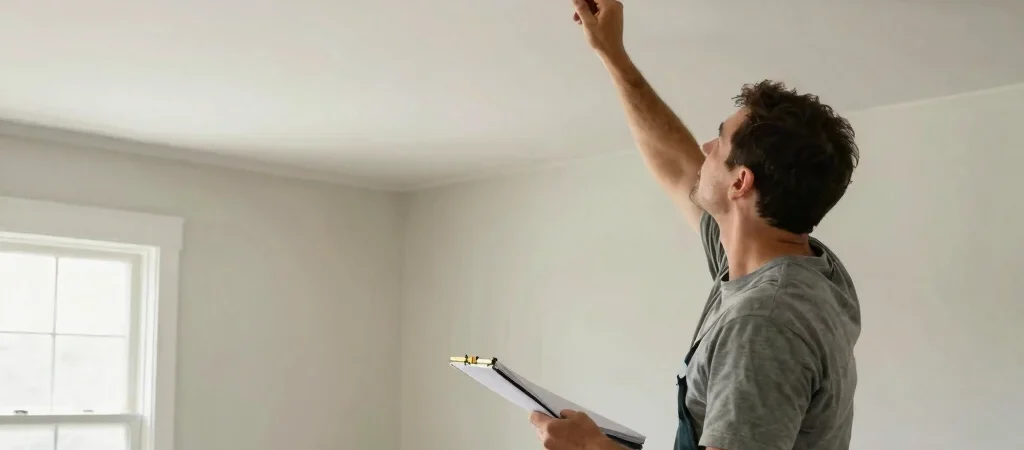
A brown ceiling mark is tempting to treat as a paint problem, especially when a room is almost ready for guests. But covering the stain before finding the source can trap a bigger repair behind clean-looking drywall. The order of work matters more than the finish.
Trace The Water First
Look for clues around the mark: a roof penetration above it, plumbing lines nearby, or water that appears only after heavy rain. A stain’s location does not always identify the entry point, because water can travel along framing before becoming visible. If the source is unclear or the damage is extensive, bring in a qualified professional rather than guessing behind a wall.
Dry And Document The Area
Once the source is addressed, allow affected materials to dry and check whether the area continues to feel damp or develop an odor. Photograph the damage and note when it appeared, particularly if you may need to discuss it with an insurer or contractor. Do not close up a cavity until you have a reasonable basis to believe the moisture problem is resolved.
Finish Only After The Cause
Replacing drywall, applying stain-blocking primer, and repainting belong near the end of the repair, not the beginning. The right repair depends on the material and extent of damage, so use contractor guidance when framing, insulation, or electrical components are involved. A small pause to confirm the area is dry can prevent a fresh finish from becoming a cover-up.